In Secret Vietsub -

So, what makes the world of in secret vietsub so clandestine? The answer lies in the way this community operates. Unlike official subtitle providers, which often work in conjunction with content creators or distributors, vietsub teams typically function independently. They scour the internet for content, painstakingly translate and synchronize subtitles, and then share their work with the public – all without seeking explicit permission or compensation.

The concept of vietsub, short for “Vietnamese subtitles,” emerged as a response to the growing demand for accessible content in the Vietnamese language. As the internet continued to bridge geographical gaps, people from diverse linguistic backgrounds began to seek out content that catered to their native tongues. In this context, vietsub was born – a grassroots movement aimed at providing Vietnamese subtitles for movies, TV shows, music videos, and other forms of media.

This clandestine approach has led to a cat-and-mouse game between vietsub teams and copyright holders. While some content creators appreciate the grassroots efforts to make their work more accessible, others view vietsub as a threat to their intellectual property rights. As a result, vietsub teams often operate in the shadows, using encrypted communication channels and pseudonyms to protect their identities. in secret vietsub

The world of in secret vietsub is not without its challenges and controversies. One of the primary concerns is the issue of copyright infringement. While vietsub teams argue that their work is fair use, as it promotes cultural exchange and accessibility, copyright holders often disagree.

In the vast and ever-expanding realm of online content, there exists a secretive world that operates beneath the radar of mainstream attention. This clandestine universe is inhabited by a dedicated community of individuals who toil tirelessly to bring Vietnamese subtitles to a global audience. Welcome to the enigmatic realm of “in secret vietsub,” where enthusiasts and professionals alike converge to share, create, and disseminate Vietnamese subtitles for a wide range of media content. So, what makes the world of in secret vietsub so clandestine

Another challenge facing vietsub teams is the quality and accuracy of their subtitles. With no formal standards or quality control measures in place, subtitles can vary significantly in terms of translation accuracy, formatting, and synchronization.

Despite the secrecy surrounding their activities, the community behind in secret vietsub is surprisingly vibrant and dedicated. These individuals, often self-described as “fans” or “enthusiasts,” are united by their passion for Vietnamese culture and language. They collaborate on projects, share knowledge, and provide feedback to ensure that their subtitles meet the highest standards. They scour the internet for content, painstakingly translate

Vietsub teams typically consist of translators, proofreaders, and technicians who work together to create and distribute subtitles. They employ a range of tools and software to synchronize subtitles with the original content, often using open-source platforms like Subtitle Editor or Aegisub.
Command line utility

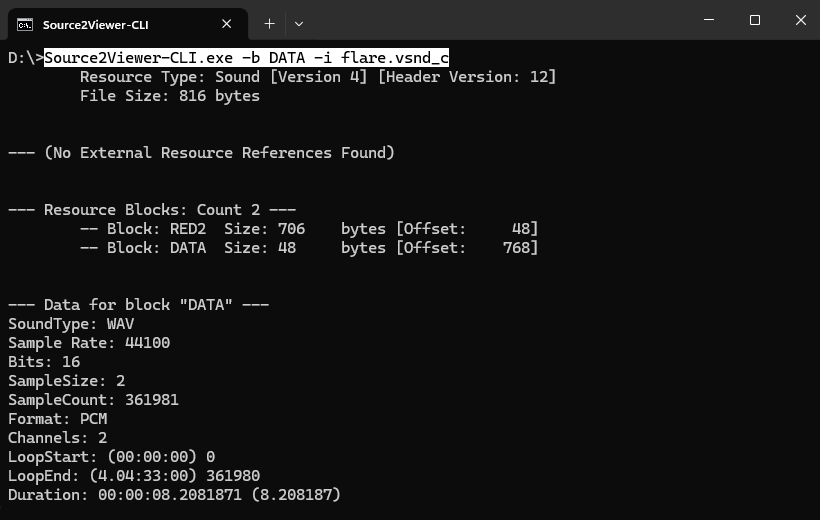
A cross-platform console application that can export and decompile Source 2 resources similar to the main application.

ValveResourceFormat

.NET library that powers Source 2 Viewer (S2V), also known as VRF. This library can be used to open and extract Source 2 resource files programmatically.

ValveResourceFormat.Renderer

.NET library providing an OpenGL-based rendering engine for Source 2 assets. Standalone rendering of models, maps, particles, animations, lighting, and materials with physically-based rendering (PBR).

ValvePak

.NET library to read Valve Pak (VPK) archives. VPK files are uncompressed archives used to package game content. This library allows you to read and extract files out of these paks.

ValveKeyValue

.NET library to read and write files in Valve key value format. This library aims to be fully compatible with Valve's various implementations of KeyValues format parsing.

C#
// Open package and read a file
using var package = new Package();
package.Read("pak01_dir.vpk");

var packageEntry = package.FindEntry("textures/debug.vtex_c");
package.ReadEntry(packageEntry, out var rawFile);

// Read file as a resource
using var ms = new MemoryStream(rawFile);
using var resource = new Resource();
resource.Read(ms);

Debug.Assert(resource.ResourceType == ResourceType.Texture);

// Get a png from the texture
var texture = (Texture)resource.DataBlock;
using var bitmap = texture.GenerateBitmap();
var png = TextureExtract.ToPngImage(bitmap);

File.WriteAllBytes("image.png", png);
View API documentation
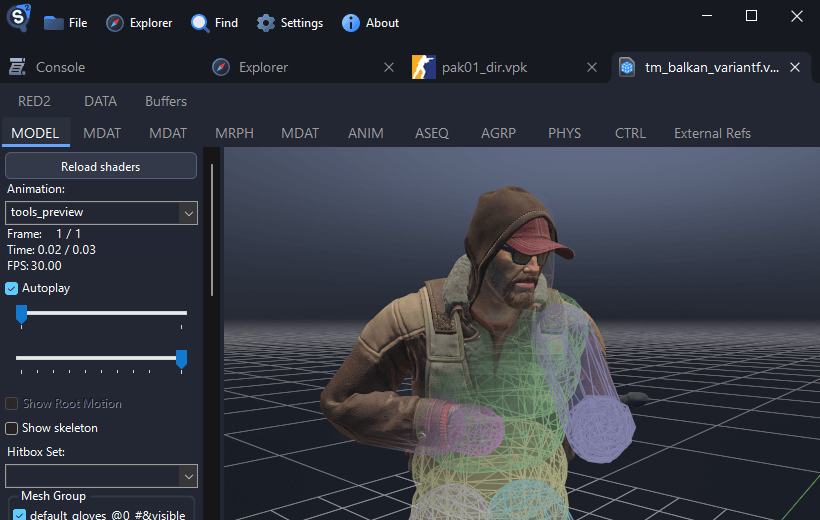
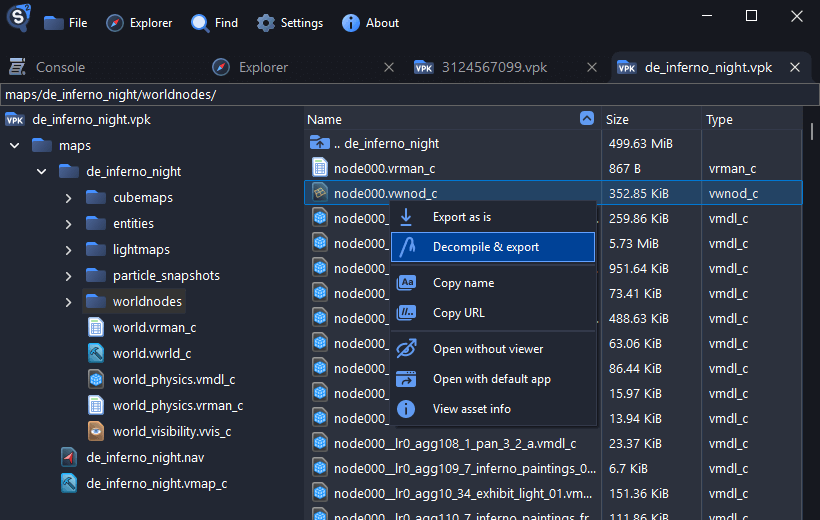
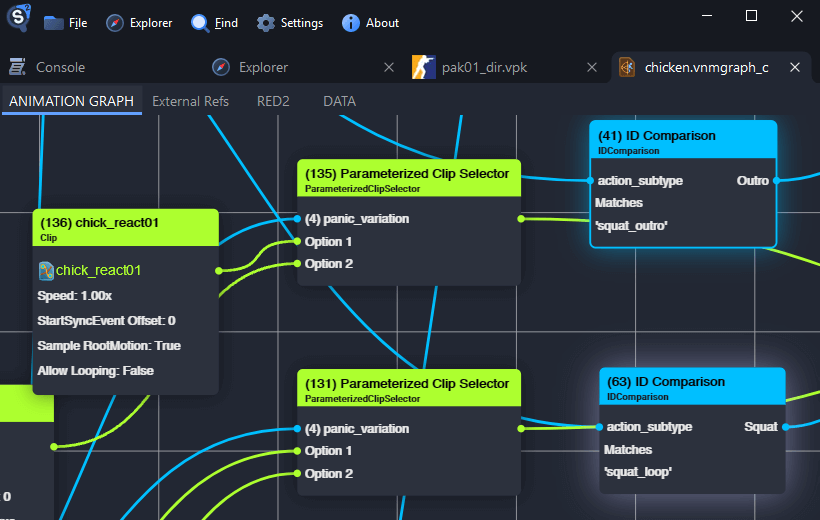
Screenshot of the 3D renderer displaying a Counter-Strike 2 player model on a grid Screenshot showing the VPK package explorer interface with a file tree and a list view Screenshot of the animation graph viewer showing nodes Screenshot of the command line interface showing DATA block for an audio file

So, what makes the world of in secret vietsub so clandestine? The answer lies in the way this community operates. Unlike official subtitle providers, which often work in conjunction with content creators or distributors, vietsub teams typically function independently. They scour the internet for content, painstakingly translate and synchronize subtitles, and then share their work with the public – all without seeking explicit permission or compensation.

The concept of vietsub, short for “Vietnamese subtitles,” emerged as a response to the growing demand for accessible content in the Vietnamese language. As the internet continued to bridge geographical gaps, people from diverse linguistic backgrounds began to seek out content that catered to their native tongues. In this context, vietsub was born – a grassroots movement aimed at providing Vietnamese subtitles for movies, TV shows, music videos, and other forms of media.

This clandestine approach has led to a cat-and-mouse game between vietsub teams and copyright holders. While some content creators appreciate the grassroots efforts to make their work more accessible, others view vietsub as a threat to their intellectual property rights. As a result, vietsub teams often operate in the shadows, using encrypted communication channels and pseudonyms to protect their identities.

The world of in secret vietsub is not without its challenges and controversies. One of the primary concerns is the issue of copyright infringement. While vietsub teams argue that their work is fair use, as it promotes cultural exchange and accessibility, copyright holders often disagree.

In the vast and ever-expanding realm of online content, there exists a secretive world that operates beneath the radar of mainstream attention. This clandestine universe is inhabited by a dedicated community of individuals who toil tirelessly to bring Vietnamese subtitles to a global audience. Welcome to the enigmatic realm of “in secret vietsub,” where enthusiasts and professionals alike converge to share, create, and disseminate Vietnamese subtitles for a wide range of media content.

Another challenge facing vietsub teams is the quality and accuracy of their subtitles. With no formal standards or quality control measures in place, subtitles can vary significantly in terms of translation accuracy, formatting, and synchronization.

Despite the secrecy surrounding their activities, the community behind in secret vietsub is surprisingly vibrant and dedicated. These individuals, often self-described as “fans” or “enthusiasts,” are united by their passion for Vietnamese culture and language. They collaborate on projects, share knowledge, and provide feedback to ensure that their subtitles meet the highest standards.

Vietsub teams typically consist of translators, proofreaders, and technicians who work together to create and distribute subtitles. They employ a range of tools and software to synchronize subtitles with the original content, often using open-source platforms like Subtitle Editor or Aegisub.
Changelog

Made possible by amazing people

Source 2 Viewer is open-source and built by volunteers. Every contribution helps make it better for everyone.